Call us: 619-542-0884
A holistic approach to healing, pain relief and wellness
Acupuncture
Practitioners: Adrian Bean | Richard Gold | Lynn Buczek | Rachel Riba | Marina Moura | William Schlesinger | Sam Wisotsky | Holly Halsey | George Tabares
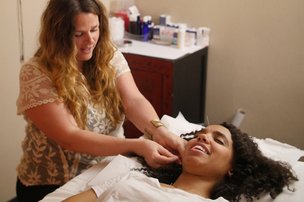
Acupuncture is an essential part of Traditional Chinese Medicine (TCM), a comprehensive system of healthcare with a continuous clinical history of over 3,000 years. Acupuncture is the Chinese medical practice of inserting needles into specific points on the body to promote health and combat disease, thereby balancing Qi (pronounced chee), energy, or life-force.
According to Chinese medical philosophy and theory, there is an unceasing flow of vital energy, Qi, throughout the human body. This Qi originates from the organ systems, manifesting as pathways of energy, referred to as channels. When the Qi flow is smooth and in balance, a person is healthy. When a channel becomes obstructed, or there is a shortage of Qi, illness and pain result.
Acupuncture consists of the gentle insertion and stimulation of micro-fine, pre-sterilized needles at strategic points along the effected channels of the body. Each acupuncture point has a specific purpose and function with a predictable result. Acupuncture points are selected and combined based on the pattern discrimination diagnosed. The Acupuncturist is able to address imbalanced channels by using acupuncture techniques to remove obstructions in the flow of Qi and supplement Qi insufficiency. In this way acupuncture utilizes the body’s innate healing abilities to promote and restore its own natural state of harmony and balance.
Acupuncture can be used to treat acute and chronic problems as well as provide preventative medical treatment. Acupuncture works with the body, increasing overall vitality and energy. It improves circulation and allows the body to heal itself more quickly and completely. Other treatment modalities used in conjunction with the needles during an acupuncture treatment include: heat packs with castor oil, cupping, moxibustion, gua sha, massage therapy, electrical stimulation, cold-laser, CranioSacral, Visceral or Neural Manipulation. Meditation techniques are also utilized during treatment.
Acupuncture is an essential part of Traditional Chinese Medicine (TCM), a comprehensive system of healthcare with a continuous clinical history of over 3,000 years. Acupuncture is the Chinese medical practice of inserting needles into specific points on the body to promote health and combat disease, thereby balancing Qi (pronounced chee), energy, or life-force.
According to Chinese medical philosophy and theory, there is an unceasing flow of vital energy, Qi, throughout the human body. This Qi originates from the organ systems, manifesting as pathways of energy, referred to as channels. When the Qi flow is smooth and in balance, a person is healthy. When a channel becomes obstructed, or there is a shortage of Qi, illness and pain result.
Acupuncture consists of the gentle insertion and stimulation of micro-fine, pre-sterilized needles at strategic points along the effected channels of the body. Each acupuncture point has a specific purpose and function with a predictable result. Acupuncture points are selected and combined based on the pattern discrimination diagnosed. The Acupuncturist is able to address imbalanced channels by using acupuncture techniques to remove obstructions in the flow of Qi and supplement Qi insufficiency. In this way acupuncture utilizes the body’s innate healing abilities to promote and restore its own natural state of harmony and balance.
Acupuncture can be used to treat acute and chronic problems as well as provide preventative medical treatment. Acupuncture works with the body, increasing overall vitality and energy. It improves circulation and allows the body to heal itself more quickly and completely. Other treatment modalities used in conjunction with the needles during an acupuncture treatment include: heat packs with castor oil, cupping, moxibustion, gua sha, massage therapy, electrical stimulation, cold-laser, CranioSacral, Visceral or Neural Manipulation. Meditation techniques are also utilized during treatment.
Chinese Medicine
Practitioners: Adrian Bean | Richard Gold |Lynn Buczek | Rachel Riba | Marina Moura | William Schlesinger | Sam Wisotsky | Holly Halsey | George Tabares
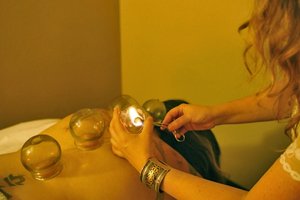
Chinese medicine is an umbrella term including Acupuncture, Chinese Herbal Medicine, Diet Therapy, Exercise Counseling, and Lifestyle Counseling. Chinese medicine is, in itself, a complete health care system that has prevented and treated illness for thousands of years. In the recent history of our country, ever-growing numbers of Medical Doctors and Patients have turned to Chinese medicine, not only as a means of strengthening the body, which can be weakened by modern-day stress, but also to treat serious conditions deemed “incurable” by Western medicine.
Chinese medicine is an umbrella term including Acupuncture, Chinese Herbal Medicine, Diet Therapy, Exercise Counseling, and Lifestyle Counseling. Chinese medicine is, in itself, a complete health care system that has prevented and treated illness for thousands of years. In the recent history of our country, ever-growing numbers of Medical Doctors and Patients have turned to Chinese medicine, not only as a means of strengthening the body, which can be weakened by modern-day stress, but also to treat serious conditions deemed “incurable” by Western medicine.
|
Commonly treated conditions:
Allergies/asthma Anxiety/Depression Arthritis/joint issues Back pain/sciatica Bladder/kidney problems Constipation/diarrhea Colds/influenza Cough/bronchitis Dizziness/Vision problems Drug/Alcohol/Smoking addiction Fatigue and Fatigue Syndromes Gastrointestinal disorders Gynecological disorders |
Headaches/migraines
High blood pressure Infertility Immune system disorders Insomnia Knee pain Menopausal discomfort Musculoskeletal disorders Neck pain/stiffness Sexual dysfunction Sinusitis Skin Problems Stress/Tension Tendonitis |
Chinese medicine is a distinct and separate system of medical thought and practice from modern biomedicine. Chinese medicine is the oldest, continuously practiced, literate, professional medical system in the world. Chinese medicine has taken the Chinese over 3000 years to develop. As it is a complete, well-researched medical system, it is difficult to both explain and comprehend in western scientific or medical terms.
In its wisdom, Chinese medicine is able to determine the strengths and weaknesses of individual Patients. Many Patients experience sub-clinical complaints, such as fatigue, headache, low sex drive or weight gain. Western medicine often does not recognize the significance of these complaints. Chinese medicine views any observable symptom or sign as related to Internal Organ function. A careful Patient interview and exam reveals to the Acupuncturist which systems in the body are strong and which are weak. This method allows not only treatment of the immediate condition, but also keeps the body/mind strong with preventative care. Chinese medicine can ‘see’ structures and functions that are weakened before they physically manifest. This is perhaps the most significant aspect of Chinese medicine.
In its wisdom, Chinese medicine is able to determine the strengths and weaknesses of individual Patients. Many Patients experience sub-clinical complaints, such as fatigue, headache, low sex drive or weight gain. Western medicine often does not recognize the significance of these complaints. Chinese medicine views any observable symptom or sign as related to Internal Organ function. A careful Patient interview and exam reveals to the Acupuncturist which systems in the body are strong and which are weak. This method allows not only treatment of the immediate condition, but also keeps the body/mind strong with preventative care. Chinese medicine can ‘see’ structures and functions that are weakened before they physically manifest. This is perhaps the most significant aspect of Chinese medicine.
Chinese Herbs
Practitioners: Adrian Bean | Richard Gold | Lynn Buczek | Rachel Riba | Marina Moura | William Schlesinger | Sam Wisotsky | Holly Halsey |George Tabares
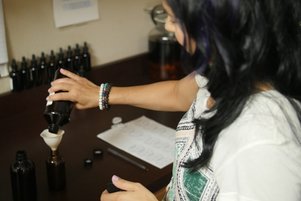
Chinese herbal prescriptions provide the Acupuncturist with a powerful tool, which allows the benefits of the healing process to continue between patient visits. There is a rich and carefully evidenced history of Chinese medicinals, dating back thousands of years. Made from organic substances such as plants, flowers and minerals, Chinese medicinals are the precursors of Western pharmaceuticals. Unlike their synthetic counterparts however, Chinese medicinals rarely elicit side effects and have been proven safe during thousands of years of use. An integral component of traditional Chinese medicine is the use of medicinal prescriptions. Medicinals are highly specific in their actions, temperature, flavor and direction, and are carefully combined to form balanced prescriptions aimed at the diagnosed pattern. Depending on the nature of your complaint you may be prescribed water-based decoctions, concentrated granular extracts, concentrated tinctures, capsules, tablets or "teapills."
Chinese herbal prescriptions provide the Acupuncturist with a powerful tool, which allows the benefits of the healing process to continue between patient visits. There is a rich and carefully evidenced history of Chinese medicinals, dating back thousands of years. Made from organic substances such as plants, flowers and minerals, Chinese medicinals are the precursors of Western pharmaceuticals. Unlike their synthetic counterparts however, Chinese medicinals rarely elicit side effects and have been proven safe during thousands of years of use. An integral component of traditional Chinese medicine is the use of medicinal prescriptions. Medicinals are highly specific in their actions, temperature, flavor and direction, and are carefully combined to form balanced prescriptions aimed at the diagnosed pattern. Depending on the nature of your complaint you may be prescribed water-based decoctions, concentrated granular extracts, concentrated tinctures, capsules, tablets or "teapills."
Massage
Practitioners: Lisa Loos | Deborah Baltazar-Moore | Jerell Ordonio | Kasumi Frisch | Bonnie Love | Joshua Ramay
| Julianna Onstad
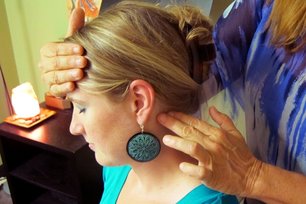
Therapeutic Massage includes an assortment of manual techniques, which the skilled Massage Therapist applies to adjust and regulate soft tissues and Qi (chi) circulation in the body. Massage cannot only promote general physical and emotional well being, but is used as a major treatment for stress/tension disorders, joint and tendon disease, musculoskeletal conditions and internal disorders. Inter-referrals between Acupuncturists and Massage ensure optimal patient care and are utilized at this Clinic.
Massage is the manipulation of superficial and deeper layers of muscle and connective tissue to enhance function, aid in the healing process, and promote relaxation and well-being.
Swedish Massage
Practitioners: Lisa Loos | Deborah Baltazar-Moore | Jerell Ordonio | Kasumi Frisch | Bonnie Love
| Joshua Ramay | Julianna Onstad
Swedish massage is a type of bodywork where the practitioner applies crème or lotion to intensify a variety of lengthy strokes that help direct blood and lymph toward your heart. This flowing motion not only allows for soft tissue manipulation, circulation and fluid flow, but feeds the blood oxygen through cells and helps rid metabolic waste from the entire body. During Swedish massage, a client lies flat on the table and the overall experience is relaxing and the pressure much lighter than deep tissue massage.
Deep Circulatory Massage
Practitioners: Lisa Loos | Deborah Baltazar-Moore
Deep Swedish (Deep Circulatory) is as described above but the practitioner uses a much deeper pressure. Deep Circulatory also helps to release tight muscle tension as well as providing the benefits of Swedish massage.
Deep Tissue Sculpting
Practitioners: Lisa Loos | Jerell Ordonio | Kasumi Frisch | Bonnie Love | Joshua Ramay | Julianna Onstad
Deep Tissue Sculpting massage uses thumb, palm and elbow compressions into muscles to release major muscle tension. The practitioner works with short and longer compressions, sometimes followed by flowing extended strokes that continue down to the end of a muscle group. During Deep Tissue Sculpting a client may be sitting or lying flat on the table. Deep Tissue Sculpting can also be used to target specific muscle injury and is recommended for specific areas of tightness rather than a full body massage.
Table Thai Massage
Practitioners: Lisa Loos | Jerell Ordonio | Kasumi Frisch
Table Thai Massage uses a series of rocking rhythms and stretches to alleviate muscle tension. The practitioner concentrates on specific muscles, palpating and compressing with hands, forearms, feet or knees to ensure complete focus of each muscle group. The practitioner also often sits on the table with the client to achieve specific techniques. During Table Thai Massage a client may be sitting, lying flat or side-lying on the table.
Floor Thai Massage
Practitioners: Jerell Ordonio | Kasumi Frisch
Unlike traditional massage where you lie on a massage table, minimally clothed with oils used to massage into the body, Floor Thai is done…on the floor. Special Thai mats are used on the floor, covered with a sheet, and you are clothed in loose, comfortable clothing. This technique involves stretching, rocking and pulling motions…very much like an “assisted yoga.” It is effective to relieve tension, improve circulation and flexibility and is very relaxing.
Pregnancy Massage
Practitioners: Kasumi Frisch | Bonnie Love
Prenatal massage is therapeutic bodywork that focuses on the special needs of the mother-to-be as her body goes through the dramatic changes of pregnancy. It enhances the function of muscles and joints, improves circulation and general body tone, and relieves mental and physical fatigue. The gentle, noninvasive approach of prenatal massage can ease discomfort associated with pregnancy, help the mother-to-be prepare for labor and give her nurturing emotional support.
Additional Massage Modalities
The following modalities are blended with other techniques and are not performed individually for an entire hour:
Practitioners: Lisa Loos | Deborah Baltazar-Moore | Bonnie Love
| Julianna Onstad
Therapeutic Massage includes an assortment of manual techniques, which the skilled Massage Therapist applies to adjust and regulate soft tissues and Qi (chi) circulation in the body. Massage cannot only promote general physical and emotional well being, but is used as a major treatment for stress/tension disorders, joint and tendon disease, musculoskeletal conditions and internal disorders. Inter-referrals between Acupuncturists and Massage ensure optimal patient care and are utilized at this Clinic.
Massage is the manipulation of superficial and deeper layers of muscle and connective tissue to enhance function, aid in the healing process, and promote relaxation and well-being.
Swedish Massage
Practitioners: Lisa Loos | Deborah Baltazar-Moore | Jerell Ordonio | Kasumi Frisch | Bonnie Love
| Joshua Ramay | Julianna Onstad
Swedish massage is a type of bodywork where the practitioner applies crème or lotion to intensify a variety of lengthy strokes that help direct blood and lymph toward your heart. This flowing motion not only allows for soft tissue manipulation, circulation and fluid flow, but feeds the blood oxygen through cells and helps rid metabolic waste from the entire body. During Swedish massage, a client lies flat on the table and the overall experience is relaxing and the pressure much lighter than deep tissue massage.
Deep Circulatory Massage
Practitioners: Lisa Loos | Deborah Baltazar-Moore
Deep Swedish (Deep Circulatory) is as described above but the practitioner uses a much deeper pressure. Deep Circulatory also helps to release tight muscle tension as well as providing the benefits of Swedish massage.
Deep Tissue Sculpting
Practitioners: Lisa Loos | Jerell Ordonio | Kasumi Frisch | Bonnie Love | Joshua Ramay | Julianna Onstad
Deep Tissue Sculpting massage uses thumb, palm and elbow compressions into muscles to release major muscle tension. The practitioner works with short and longer compressions, sometimes followed by flowing extended strokes that continue down to the end of a muscle group. During Deep Tissue Sculpting a client may be sitting or lying flat on the table. Deep Tissue Sculpting can also be used to target specific muscle injury and is recommended for specific areas of tightness rather than a full body massage.
Table Thai Massage
Practitioners: Lisa Loos | Jerell Ordonio | Kasumi Frisch
Table Thai Massage uses a series of rocking rhythms and stretches to alleviate muscle tension. The practitioner concentrates on specific muscles, palpating and compressing with hands, forearms, feet or knees to ensure complete focus of each muscle group. The practitioner also often sits on the table with the client to achieve specific techniques. During Table Thai Massage a client may be sitting, lying flat or side-lying on the table.
Floor Thai Massage
Practitioners: Jerell Ordonio | Kasumi Frisch
Unlike traditional massage where you lie on a massage table, minimally clothed with oils used to massage into the body, Floor Thai is done…on the floor. Special Thai mats are used on the floor, covered with a sheet, and you are clothed in loose, comfortable clothing. This technique involves stretching, rocking and pulling motions…very much like an “assisted yoga.” It is effective to relieve tension, improve circulation and flexibility and is very relaxing.
Pregnancy Massage
Practitioners: Kasumi Frisch | Bonnie Love
Prenatal massage is therapeutic bodywork that focuses on the special needs of the mother-to-be as her body goes through the dramatic changes of pregnancy. It enhances the function of muscles and joints, improves circulation and general body tone, and relieves mental and physical fatigue. The gentle, noninvasive approach of prenatal massage can ease discomfort associated with pregnancy, help the mother-to-be prepare for labor and give her nurturing emotional support.
Additional Massage Modalities
The following modalities are blended with other techniques and are not performed individually for an entire hour:
Practitioners: Lisa Loos | Deborah Baltazar-Moore | Bonnie Love
- Tui Na (a technique using the hands to grasp and push to help produce body & energetic change).
- Lomi Lomi (similar to Swedish massage, a combination of two-handed, forearm and elbow strokes made lengthy and flowing with cross-fiber friction and a clandestine prayer connection).
- Sensory Repatterning (a method of passive joint movement and gentle body stretching and undulations).
CranioSacral Therapy - Visceral Manipulation - Neural Manipulation
Practitioners: Adrian Bean | Sam Wisotsky | Rachel Riba | Marina Moura | Lynn Buczek | Joshua Ramay
CranioSacral Therapy
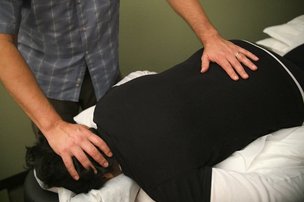
CranioSacral Therapy (CST for short) is a very gentle osteopathic technique that releases restrictions of the central nervous system. CranioSacral Therapy is based on myofascial release. The many layers of tissues in the body often become adhered to one another. These adhesions limit the independent motion of the various tissues which leads to pain, decreased circulation, and loss of function. CST helps restore the proper freedom of movement.
CST is a gentle form of energy work where the practitioner uses hand placements around specific areas to allow the body to realign itself naturally. Because this energy method invites internal body movement and correction from the head to the sacrum, the spinal fluid is addressed and oftentimes readjusts itself to harmonize within the body. More space is made available to free the cranial bones from tightness, oftentimes releasing chronic head, neck and shoulder imbalance. While receiving CranioSacral Therapy a client is fully clothed and lies flat on the table and may fall asleep, feel referring body movements, see colors or experience vivid memories.
CranioSacral refers to the cranium (the head) and the sacrum (the base of the spine). The word "osteopathy" means "bone disorder" or "osseous pathology". You can think of the cranium as the "north pole" and the sacrum as the "south pole" of the spine. They act like a see-saw; if one bone pulls or tilts, the other bone responds directly.
CranioSacral Therapy
CranioSacral Therapy (CST for short) is a very gentle osteopathic technique that releases restrictions of the central nervous system. CranioSacral Therapy is based on myofascial release. The many layers of tissues in the body often become adhered to one another. These adhesions limit the independent motion of the various tissues which leads to pain, decreased circulation, and loss of function. CST helps restore the proper freedom of movement.
CST is a gentle form of energy work where the practitioner uses hand placements around specific areas to allow the body to realign itself naturally. Because this energy method invites internal body movement and correction from the head to the sacrum, the spinal fluid is addressed and oftentimes readjusts itself to harmonize within the body. More space is made available to free the cranial bones from tightness, oftentimes releasing chronic head, neck and shoulder imbalance. While receiving CranioSacral Therapy a client is fully clothed and lies flat on the table and may fall asleep, feel referring body movements, see colors or experience vivid memories.
CranioSacral refers to the cranium (the head) and the sacrum (the base of the spine). The word "osteopathy" means "bone disorder" or "osseous pathology". You can think of the cranium as the "north pole" and the sacrum as the "south pole" of the spine. They act like a see-saw; if one bone pulls or tilts, the other bone responds directly.
Visceral Manipulation
Visceral Manipulation (VM for short) is a series of gentle manual techniques designed to increase the range of motion of organs. In some ways it is similar to CranioSacral Therapy. Each organ has a range of motion, just like your shoulder or neck. Most of us don't really think about it but our organs are all pressed together vying for space. Organs like the lungs and stomach change size continuously. When they are full, they compress their neighboring organs. As they empty, the neighbors push back and compress them. Your kidneys actually "move" about 1.5 miles per day; an inch at a time with each breath. As your diaphragm contracts, it pulls downward on the upper abdomen, causing the kidneys to slide downward. As your diaphragm relaxes and you exhale, your kidneys glide back upward (hopefully). All organs, including the brain, respond well to VM. Virtually any disease process involves some form of organ compromise. While VM is primarily used for myofascial restrictions, it can help many metabolic problems as well.
Visceral Manipulation (VM for short) is a series of gentle manual techniques designed to increase the range of motion of organs. In some ways it is similar to CranioSacral Therapy. Each organ has a range of motion, just like your shoulder or neck. Most of us don't really think about it but our organs are all pressed together vying for space. Organs like the lungs and stomach change size continuously. When they are full, they compress their neighboring organs. As they empty, the neighbors push back and compress them. Your kidneys actually "move" about 1.5 miles per day; an inch at a time with each breath. As your diaphragm contracts, it pulls downward on the upper abdomen, causing the kidneys to slide downward. As your diaphragm relaxes and you exhale, your kidneys glide back upward (hopefully). All organs, including the brain, respond well to VM. Virtually any disease process involves some form of organ compromise. While VM is primarily used for myofascial restrictions, it can help many metabolic problems as well.
Neural Manipulation
A nerve only functions correctly when it is able to move feely within its surrounding structures. Peripheral nerves, like muscles, have blood flow, can be dehydrated and kinked. By understanding the detailed anatomy of the neural manipulation, one can clearly see the potential for pathological change when nerves are restricted. Neural Manipulation is an expansion of CST including peripheral nerves. In this way we can directly treat orthopedic problems anywhere in the body. It's a light touch on the nerves to restore their range of motion. This, in turn, allows every muscle and organ that the nerve innervates, to be regulated. Common disorders treated:
A nerve only functions correctly when it is able to move feely within its surrounding structures. Peripheral nerves, like muscles, have blood flow, can be dehydrated and kinked. By understanding the detailed anatomy of the neural manipulation, one can clearly see the potential for pathological change when nerves are restricted. Neural Manipulation is an expansion of CST including peripheral nerves. In this way we can directly treat orthopedic problems anywhere in the body. It's a light touch on the nerves to restore their range of motion. This, in turn, allows every muscle and organ that the nerve innervates, to be regulated. Common disorders treated:
- Anxiety
- Headaches
- Insomnia
- TMJ dysfunction
- Neck and back pain
- Sinus and eye problems
- Multiple Sclerosis
- Autism
- Trauma injuries to the brain and spine
- Neuralgia (nerve pain)/ Nervous system disorders
- Pain syndromes (Nerve pain, Carpal Tunnel, Spinal Disc, etc)
- Scar tissue, surgeries and adhesions
- Stress Diseases, Stroke and Neurological Rehabilitation
- Atherosclerosis, Heart Disease, Circulatory System
- Asthma, pleurisy, pneumonia, CF, Sinusitis, Bronchitis
- Digestive disorders: IBS, Reflux, Constipation, Inflammatory Conditions
- Fatigue, Viral infections, poor immunity, metabolic diseases
- Renal issues, Cystitis, Prostate
- Infertility, Menstrual Difficulty, Fibroids
- Lower Back Pain & Sciatica
- Joint Pain
- Swallowing Dysfunctions
- Thoracic Outlet Syndrome
- Whiplash Injuries
- Birth Injuries
Pediatric CranioSacral Therapy
Practitioners: Adrian Bean
Cranial work is a natural fit for infants and children. It is extremely gentle and it supports the growth and development of the brain and nervous system. A combination of CranioSacral Therapy (CST), Visceral Manipulation (VM), and Neural Manipulation (NM) are utilized to treat children. These gentle therapies can resolve structural and functional issues and are perfectly suited to the special needs of infants and kids.
Common conditions for newborns that we treat effectively:
The gut is the foundation of the immune system. We have seen a dramatic increase in the incidence of immune system disorders and inflammation. It can show on the skin, in the respiratory system, and in digestion. Inflammation can also effect the brain, causing cognitive and behavioral symptoms. A condition called "leaky gut syndrome" involves a weak barrier in the lining of the intestines that allows large food particles to enter the bloodstream. This creates an immune response and contributes to food sensitivities. It so happens that the blood brain barrier is very similar to the gut lining. When this lining is compromised, we see increased inflammation in the brain. Sadly, many kids are being born with weakness in both of these linings.
There are many factors that contribute to Autism and the "spectrum". One genetic component relates to the MTHFR gene that controls methylation. Many kids are predisposed to having difficulty adding a "methyl group" onto various molecules and vitamins. This renders them useless. Cells need these materials and the metabolic pathways get derailed, resulting in inflammation. The liver, brain, and vascular system are often primarily effected. It also relates to how well we fight infections. The genetic component of familial depression is often related to MTHFR mutations, as methylation is necessary to form serotonin. MTHFR also relates to food and medication sensitivities. We can test kids or adults to asses methylation status which can help us provide the right nutritional support.
Cranial work is a natural fit for infants and children. It is extremely gentle and it supports the growth and development of the brain and nervous system. A combination of CranioSacral Therapy (CST), Visceral Manipulation (VM), and Neural Manipulation (NM) are utilized to treat children. These gentle therapies can resolve structural and functional issues and are perfectly suited to the special needs of infants and kids.
Common conditions for newborns that we treat effectively:
- Torticollis - bent neck
- Plagiocephaly - cranial asymmetry
- Hip malalignment
- Colic
- Issues swallowing or latching on
- Issues sleeping
- Recurrent infections, sinus/ear/lung
- Skin problems
The gut is the foundation of the immune system. We have seen a dramatic increase in the incidence of immune system disorders and inflammation. It can show on the skin, in the respiratory system, and in digestion. Inflammation can also effect the brain, causing cognitive and behavioral symptoms. A condition called "leaky gut syndrome" involves a weak barrier in the lining of the intestines that allows large food particles to enter the bloodstream. This creates an immune response and contributes to food sensitivities. It so happens that the blood brain barrier is very similar to the gut lining. When this lining is compromised, we see increased inflammation in the brain. Sadly, many kids are being born with weakness in both of these linings.
There are many factors that contribute to Autism and the "spectrum". One genetic component relates to the MTHFR gene that controls methylation. Many kids are predisposed to having difficulty adding a "methyl group" onto various molecules and vitamins. This renders them useless. Cells need these materials and the metabolic pathways get derailed, resulting in inflammation. The liver, brain, and vascular system are often primarily effected. It also relates to how well we fight infections. The genetic component of familial depression is often related to MTHFR mutations, as methylation is necessary to form serotonin. MTHFR also relates to food and medication sensitivities. We can test kids or adults to asses methylation status which can help us provide the right nutritional support.
|
Phone: (619) 542-0884
Fax: (619) 542-0949
|


© Pacific Center of Health. All rights reserved. Login.