
Call us: 619-542-0884
Frequently asked questions about acupuncture
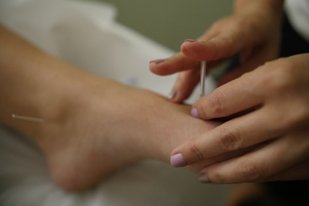
What is acupuncture?
Acupuncture is one of the oldest, most commonly used medical procedures in the world, originating in China more than 2,000 years ago. The term acupuncture describes a family of procedures involving stimulation of anatomical points on the body by a variety of techniques. American practices of acupuncture incorporate medical traditions from China, Japan, Korea, and other countries. The acupuncture technique that has been most studied scientifically involves penetrating the skin with thin, solid, metallic needles that are manipulated by the hands or by electrical stimulation. The bodies own electromagnetic energy is used as the needles stimulate that energy to promote healing.
How does acupuncture work?
This is a very good question with two very good answers. The Western answer is that acupuncture stimulates nerves and helps the body achieve homeostasis (balance). Acupuncture improves circulation and reduces inflammation while facilitating communication between various body systems (hormonal and neurological, for example) and reducing pain. The Chinese answer is based on the concept of "qi". Qi is energy (which we can sense as heat and movement). It is similar to electricity. Acupuncture balances and moves the qi, which allows the body to function optimally. Chinese medicine uses tiny needles to access and activate qi (pronounced "chee" - most closely translated into Western thought as "vital energy"), which helps nurture the body back to health by helping resolve energy imbalances.
Traditional Chinese Medicine Theory
The Classical Chinese explanation is that energy (Qi) flows in channels (meridians) throughout the body and over its surfaces. These channels are rivers of energy which are referred to as meridians. The Chinese have identified 71 meridians in the human body, which is a basic energy map for all people. The meridians are often compared to a series of interconnected highways. Each of the major organs in the body is associated with its own meridian. Through the network of meridians the internal organs are connected to certain areas and parts of the body including the muscles, bones, joints, and also other organs. The Chinese believe that health is a manifestation of balance, both within the body itself and between the body and the external environment. When the body is internally balanced and in harmony with the external environment, Qi flows smoothly through the meridians to nourish the organs and tissues. If an obstruction occurs in one of the meridians, the Qi is disrupted and cannot flow properly. When the Qi cannot flow smoothly or is forced to flow in the opposite direction, the body's innate balance is disrupted and illness results. Acupuncture points are the specific points on the meridians where the Qi is both concentrated and accessible. Acupuncture engages the Qi by inserting needles at these specific points, the goal being to restore the proper flow of Qi. As the body regains its natural balance, well-being returns.
Acupuncture and Modern Science
To the human body, acupuncture needles are a physical stimulus. In Western science, a stimulus is defined as a detectable change in either the external environment or within the body itself. When the body detects change, it produces a response. Although acupuncture is not yet fully understood by Western science, with modern technology scientists can now actually begin to "see" the body's response to acupuncture. For example, using an MRI (a very sophisticated x-ray), researchers have shown that when a needle is inserted at specific acupuncture points on the body, corresponding changes occur in the brain. In the West, acupuncture is most well-known for its ability to relieve pain so the majority of research thus far has been done in this area. Acupuncture points are now believed to stimulate the central nervous system (the brain and spinal cord) to release pain-relieving chemicals into the muscles, spinal cord and brain. Acupuncture may also stimulate other chemicals to be released by the brain, including hormones that influence the self-regulating system of the body.
Is acupuncture Safe?
Yes. In 1996, the U.S. Food and Drug Administration (FDA) removed the experimental status tag on acupuncture needles and approved acupuncture needles for use by licensed Practitioners. The FDA reclassified acupuncture needles, regulating them as it does medical devices such as surgical scalpels and hypodermic syringes. Acupuncture needles must now be manufactured according to single-use standards of sterility. At Pacific Center of Health we have only ever used and will only ever use single use, disposable needles. It is unethical to re-use needles and we have very strict guidelines about needles in our office. All acupuncture needles are disposed of in biohazardous waste containers, as also required by law, and are disposed of on a regular basis.
What are the acupuncture needles like?
Acupuncture needles are solid, not hollow like needles used by doctors. They are small and hair-thin and can literally be bent with your pinky.
How are acupuncturists Licensed?
The California Acupuncture Board is responsible for licensing Acupuncturists. Once a Practitioner has completed many years of Acupuncture schooling and have graduated, they sit for the State exam, which includes both a practical and clinical component. Upon successful completion, Acupuncturists are licensed. Like other medical Providers, Acupuncturists must complete CEU’s (continuing educational units) to stay current in their field. They must renew their licenses bi-annually and must possess malpractice insurance. Acupuncturists are primary treating physicians for workers comp patients and are contracted with many insurance companies and are therefore considered to be a Patients primary healthcare provider.
What does an acupuncture treatment consist of?
Anywhere between 6-15 surgical grade stainless steel pins are inserted shallowly into various points on the skin. Patients generally lie down for the procedure, which may last about 15-30 minutes. The entire treatment may last 45 minutes to an hour. We only use very thin, disposable needles and most treatments are painless.
Do the acupuncture needles hurt?
First of all, acupuncture needles are a fraction of the size of a hypodermic (typical “shot”) needle. Five acupuncture needles can easily fit inside the hole of a typical hypodermic needles. Insertion of the needles is basically painless, but sometimes a slight sting can occur (like a mosquito bite) when they are stimulated to release the energy.
What should I expect from my first treatment?
This depends on the condition we are treating. Most people are pleasantly surprised that the treatment itself is comfortable. Acupuncture tends to relax people and often leads to a sense of well being and very restful sleep. Some people feel drowsy after treatment and others feel refreshed and invigorated. Some people experience soreness after treatment. This is noted more commonly for those suffering from chronic pain. Heat, and sometimes ice, tends to soothe any soreness and it is recommended to drink plenty of water to help the body cleanse. This soreness is often caused by lactic acid that is released from the treatment. Many patients report pain relief after this temporary soreness.
What should I wear for my acupuncture treatment?
Just wear loose fitting clothes that can be easily rolled up above your elbows and knees.
How long does a typical acupuncture treatment take?
The first treatment always takes longer because, like any health Practitioner, the Patients history must be taken and condition assessment must be performed. The first treatment usually takes about 1 ½ hours. Follow-up treatments generally last from 45 minutes to 1 hr.
How long until I get results?
Some people feel results quickly while others require several treatments before measurable results are attained. A more accurate prognosis can be made in person based on the individual circumstances of the case. For most acute (short term) problems, 4 treatments may be adequate. Many chronic conditions respond well to treatment but require longer term care. Wear loose comfortable clothing. It is best to have eaten a few hours before treatment so that you are not hungry but not full either.
What conditions are commonly treated with acupuncture?
Allergies and asthma
Anxiety, depression
Arthritis/joint issues
Back pain/sciatica
Bladder/kidney problems
Constipation/diarrhea
Colds/influenza
Cough/bronchitis
Dizziness/Vision problems
Drug/Alcohol/Smoking addiction
Fatigue and Fatigue Syndromes
Gastrointestinal disorders
Gynecological disorders
Headaches/migraines
High blood pressure
Infertility
Immune system disorders
Insomnia
Knee pain
Menopausal discomfort
Musculoskeletal disorders
Neck pain/stiffness
Sexual dysfunction
Sinusitis
Skin Problems
Stress/Tension
Tendonitis
Acupuncture is one of the oldest, most commonly used medical procedures in the world, originating in China more than 2,000 years ago. The term acupuncture describes a family of procedures involving stimulation of anatomical points on the body by a variety of techniques. American practices of acupuncture incorporate medical traditions from China, Japan, Korea, and other countries. The acupuncture technique that has been most studied scientifically involves penetrating the skin with thin, solid, metallic needles that are manipulated by the hands or by electrical stimulation. The bodies own electromagnetic energy is used as the needles stimulate that energy to promote healing.
How does acupuncture work?
This is a very good question with two very good answers. The Western answer is that acupuncture stimulates nerves and helps the body achieve homeostasis (balance). Acupuncture improves circulation and reduces inflammation while facilitating communication between various body systems (hormonal and neurological, for example) and reducing pain. The Chinese answer is based on the concept of "qi". Qi is energy (which we can sense as heat and movement). It is similar to electricity. Acupuncture balances and moves the qi, which allows the body to function optimally. Chinese medicine uses tiny needles to access and activate qi (pronounced "chee" - most closely translated into Western thought as "vital energy"), which helps nurture the body back to health by helping resolve energy imbalances.
Traditional Chinese Medicine Theory
The Classical Chinese explanation is that energy (Qi) flows in channels (meridians) throughout the body and over its surfaces. These channels are rivers of energy which are referred to as meridians. The Chinese have identified 71 meridians in the human body, which is a basic energy map for all people. The meridians are often compared to a series of interconnected highways. Each of the major organs in the body is associated with its own meridian. Through the network of meridians the internal organs are connected to certain areas and parts of the body including the muscles, bones, joints, and also other organs. The Chinese believe that health is a manifestation of balance, both within the body itself and between the body and the external environment. When the body is internally balanced and in harmony with the external environment, Qi flows smoothly through the meridians to nourish the organs and tissues. If an obstruction occurs in one of the meridians, the Qi is disrupted and cannot flow properly. When the Qi cannot flow smoothly or is forced to flow in the opposite direction, the body's innate balance is disrupted and illness results. Acupuncture points are the specific points on the meridians where the Qi is both concentrated and accessible. Acupuncture engages the Qi by inserting needles at these specific points, the goal being to restore the proper flow of Qi. As the body regains its natural balance, well-being returns.
Acupuncture and Modern Science
To the human body, acupuncture needles are a physical stimulus. In Western science, a stimulus is defined as a detectable change in either the external environment or within the body itself. When the body detects change, it produces a response. Although acupuncture is not yet fully understood by Western science, with modern technology scientists can now actually begin to "see" the body's response to acupuncture. For example, using an MRI (a very sophisticated x-ray), researchers have shown that when a needle is inserted at specific acupuncture points on the body, corresponding changes occur in the brain. In the West, acupuncture is most well-known for its ability to relieve pain so the majority of research thus far has been done in this area. Acupuncture points are now believed to stimulate the central nervous system (the brain and spinal cord) to release pain-relieving chemicals into the muscles, spinal cord and brain. Acupuncture may also stimulate other chemicals to be released by the brain, including hormones that influence the self-regulating system of the body.
Is acupuncture Safe?
Yes. In 1996, the U.S. Food and Drug Administration (FDA) removed the experimental status tag on acupuncture needles and approved acupuncture needles for use by licensed Practitioners. The FDA reclassified acupuncture needles, regulating them as it does medical devices such as surgical scalpels and hypodermic syringes. Acupuncture needles must now be manufactured according to single-use standards of sterility. At Pacific Center of Health we have only ever used and will only ever use single use, disposable needles. It is unethical to re-use needles and we have very strict guidelines about needles in our office. All acupuncture needles are disposed of in biohazardous waste containers, as also required by law, and are disposed of on a regular basis.
What are the acupuncture needles like?
Acupuncture needles are solid, not hollow like needles used by doctors. They are small and hair-thin and can literally be bent with your pinky.
How are acupuncturists Licensed?
The California Acupuncture Board is responsible for licensing Acupuncturists. Once a Practitioner has completed many years of Acupuncture schooling and have graduated, they sit for the State exam, which includes both a practical and clinical component. Upon successful completion, Acupuncturists are licensed. Like other medical Providers, Acupuncturists must complete CEU’s (continuing educational units) to stay current in their field. They must renew their licenses bi-annually and must possess malpractice insurance. Acupuncturists are primary treating physicians for workers comp patients and are contracted with many insurance companies and are therefore considered to be a Patients primary healthcare provider.
What does an acupuncture treatment consist of?
Anywhere between 6-15 surgical grade stainless steel pins are inserted shallowly into various points on the skin. Patients generally lie down for the procedure, which may last about 15-30 minutes. The entire treatment may last 45 minutes to an hour. We only use very thin, disposable needles and most treatments are painless.
Do the acupuncture needles hurt?
First of all, acupuncture needles are a fraction of the size of a hypodermic (typical “shot”) needle. Five acupuncture needles can easily fit inside the hole of a typical hypodermic needles. Insertion of the needles is basically painless, but sometimes a slight sting can occur (like a mosquito bite) when they are stimulated to release the energy.
What should I expect from my first treatment?
This depends on the condition we are treating. Most people are pleasantly surprised that the treatment itself is comfortable. Acupuncture tends to relax people and often leads to a sense of well being and very restful sleep. Some people feel drowsy after treatment and others feel refreshed and invigorated. Some people experience soreness after treatment. This is noted more commonly for those suffering from chronic pain. Heat, and sometimes ice, tends to soothe any soreness and it is recommended to drink plenty of water to help the body cleanse. This soreness is often caused by lactic acid that is released from the treatment. Many patients report pain relief after this temporary soreness.
What should I wear for my acupuncture treatment?
Just wear loose fitting clothes that can be easily rolled up above your elbows and knees.
How long does a typical acupuncture treatment take?
The first treatment always takes longer because, like any health Practitioner, the Patients history must be taken and condition assessment must be performed. The first treatment usually takes about 1 ½ hours. Follow-up treatments generally last from 45 minutes to 1 hr.
How long until I get results?
Some people feel results quickly while others require several treatments before measurable results are attained. A more accurate prognosis can be made in person based on the individual circumstances of the case. For most acute (short term) problems, 4 treatments may be adequate. Many chronic conditions respond well to treatment but require longer term care. Wear loose comfortable clothing. It is best to have eaten a few hours before treatment so that you are not hungry but not full either.
What conditions are commonly treated with acupuncture?
Allergies and asthma
Anxiety, depression
Arthritis/joint issues
Back pain/sciatica
Bladder/kidney problems
Constipation/diarrhea
Colds/influenza
Cough/bronchitis
Dizziness/Vision problems
Drug/Alcohol/Smoking addiction
Fatigue and Fatigue Syndromes
Gastrointestinal disorders
Gynecological disorders
Headaches/migraines
High blood pressure
Infertility
Immune system disorders
Insomnia
Knee pain
Menopausal discomfort
Musculoskeletal disorders
Neck pain/stiffness
Sexual dysfunction
Sinusitis
Skin Problems
Stress/Tension
Tendonitis
Frequently asked questions about massage therapy
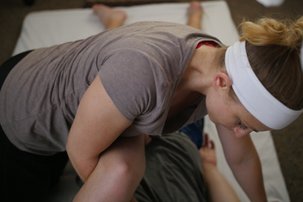
How often should I receive massage?
Each client is an individual, therefore each body responds differently to massage. The healthy body experiences massage maintenance once a month. Specific areas that have been injured or harbor years of habitual muscle stress and tension may need massage on a minimum average of once a week.
My friends say that massage has to hurt in order for it to work. Is this true?
Some techniques of massage are meant to go deeper into a muscle or muscle layer. However, some areas of the body are more sensitive than others. Some practitioners have a talent for feeling how deep they can take a muscle just prior to discomfort, but it is always best to communicate with your practitioner on how much pressure you are willing to take when in need of deeper work.
How will I feel after a massage?
This answer depends on the type of massage given. Most massages leave a person feeling relaxed and carefree. Yet others can provide a new burst of energy to the body system. It's best to talk with your therapist after the massage to see how your body responded and what to expect during future sessions.
I heard that massage can help headaches. Is that true?
There are specific techniques that alleviate cranial, neck and shoulder tension. Because this muscle group area is known to cause headaches, by relieving tightness in this area, many people have obtained headache relief.
Each client is an individual, therefore each body responds differently to massage. The healthy body experiences massage maintenance once a month. Specific areas that have been injured or harbor years of habitual muscle stress and tension may need massage on a minimum average of once a week.
My friends say that massage has to hurt in order for it to work. Is this true?
Some techniques of massage are meant to go deeper into a muscle or muscle layer. However, some areas of the body are more sensitive than others. Some practitioners have a talent for feeling how deep they can take a muscle just prior to discomfort, but it is always best to communicate with your practitioner on how much pressure you are willing to take when in need of deeper work.
How will I feel after a massage?
This answer depends on the type of massage given. Most massages leave a person feeling relaxed and carefree. Yet others can provide a new burst of energy to the body system. It's best to talk with your therapist after the massage to see how your body responded and what to expect during future sessions.
I heard that massage can help headaches. Is that true?
There are specific techniques that alleviate cranial, neck and shoulder tension. Because this muscle group area is known to cause headaches, by relieving tightness in this area, many people have obtained headache relief.
"I have been going to the Pacific Center of Health for over 12 years for acupuncture, chiropractic, massage therapy, nutrition counseling, etc.
The quality of service is excellent, from the health care providers to the assistants/massage experts and the reception staff. Everyone is very thoughtful and caring.
I was referred to Dr. Rick Gold by a friend that though acupuncture would be helpful for my tennis elbow. I was hesitant at first, but when I heard that many professional athletes use acupuncture to help heal form injuries and to maintain their top performance, I though I would give it a try (in addition it is recognized by many health insurance companies and the World Health Organization as an effective treatment for many health problems). I have never been disappointed!
The actual treatments are almost pain free, you barely even feel the needles as they are inserted and the process of relaxing while the needles awaken the body's natural healing energy is truly amazing. It is an extremely relaxing experience that literally allows you to rest in bliss (you have a choice of soft music in the back if you wish) for 20 to 40 minutes (this varies) and then at the end of the session, there is usually a wonderful brief massage of the affected area, or perhaps just the neck and shoulders!
Acupuncture allows the body to heal itself and is extremely effective for a number of aliments. Presently, I see Dr. Gold at least once a month as a maintenance process.
And, if I have a virus or some other health issue, the acupuncture works wonders (they also have an ample selection of herbal remedies if needed). For some aliments (like my tennis elbow) acupuncture requires a series of sessions to have results, for something like a sore or tight lower back, it can bring immediate relief. I highly recommend the Pacific Center of Health, your body, mind and soul deserve the best in Health care!
" ~ Tim Truitt, PhD, San Diego, CA
"Everyone at PCoH is amazing - but this review is specifically for Rachel Riba. She is absolutely awesome - and the only other person I will go to for acupuncture outside of Adrian Bean. She's everything you could want in an acupuncturist - she listens, asks questions, and works with you to make sure she is treating the real issue. No question is dumb, and you never feel rushed. She truly cares about getting it right! Can't recommend her highly enough!" ~ Tanya M., San Diego
|
Phone: (619) 542-0884
Fax: (619) 542-0949
|


© Pacific Center of Health. All rights reserved. Login.